
You Were Never Really Here
On SOMA, the loneliness of consciousness, and why I still check the hallway before I go to the kitchen at midnight

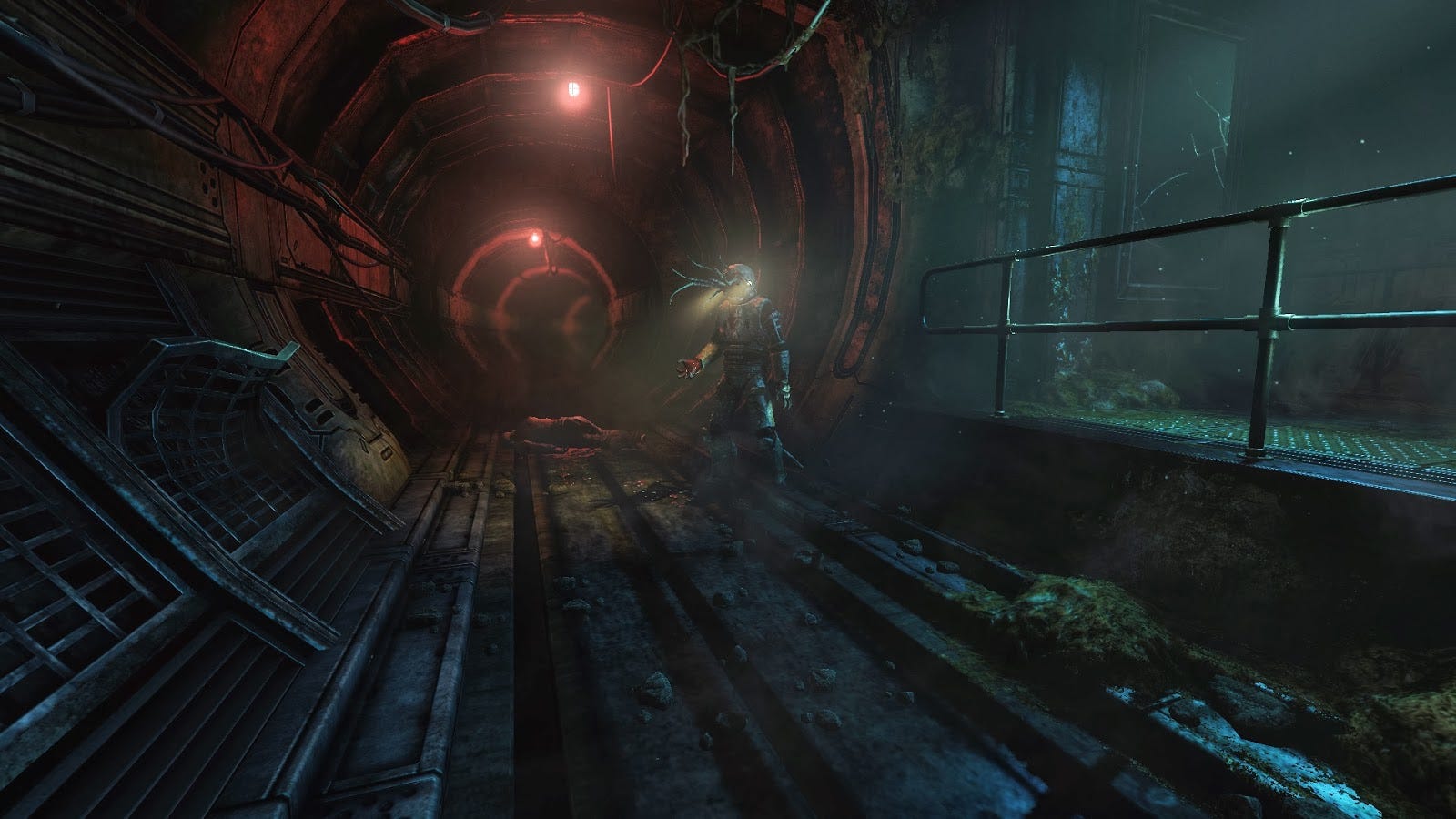
There’s a specific kind of dread that SOMA produces. One that has nothing to do with the creatures lurking in the dark corridors of PATHOS-II.
It arrives quietly, dressed as a philosophical thought experiment, and it doesn’t leave. Not when you put the controller down. Not when you turn the lights back on.
Not, it turns out, years later, when you’re padding across cold floor tiles at half midnight for a glass of water and you catch your own reflection in the kitchen window and think, even for just a half-second: but is that actually me?
That’s the trick SOMA pulls.
It uses the haunted-house architecture of a survival horror game to smuggle in something far more troubling than any monster. It makes you genuinely uncertain about the nature of your own mind. It does this so effectively, so unflinchingly, that to call it a horror game feels almost reductive.
It’s a horror game the way Solaris is a space film. The setting is incidental, the wound is philosophical.
What Is the Sea Keeping?
The year is 2104.
You are Simon Jarrett, a man with brain damage living in Toronto, who agrees to an experimental scan of his neural patterns. You wake up in an underwater research station at the bottom of the Atlantic Ocean, and you have no idea how you got there.
The staff are dead, or worse — fused with machines, still half-alive, begging you to either help them or end them. Crikey.
The facility’s AI, Catherine, has a plan to save what’s left of humanity. The planet above has been destroyed by a comet impact. The ARK, which is a digital simulation loaded with human consciousness scans, is humanity’s last lifeboat.
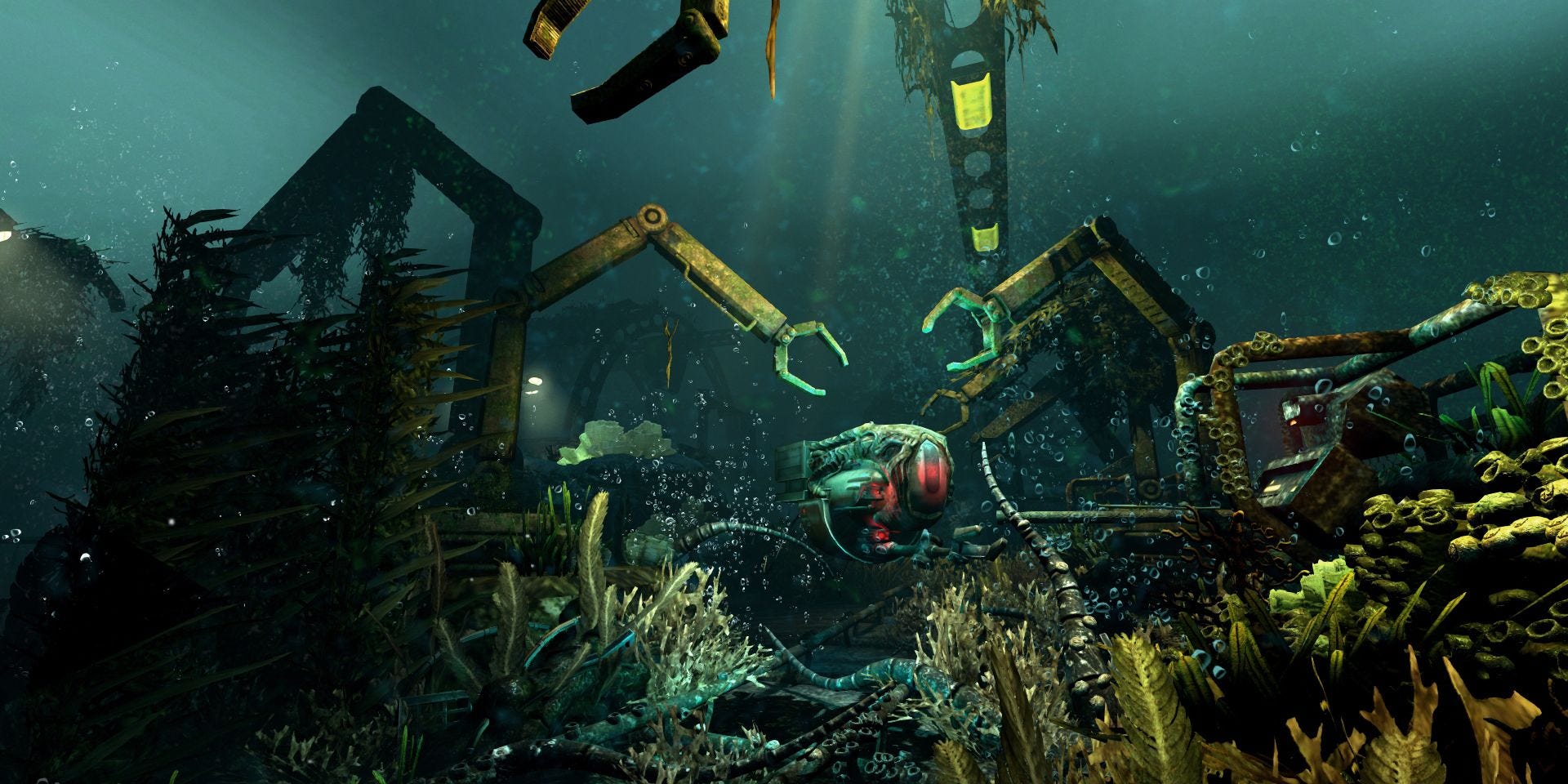
It sounds like science fiction scaffolding, and it is. But earns every piece of it. The world-building is meticulous and melancholy in equal measure, delivered through voice recordings, scattered notes, and environmental storytelling that rewards the player who slows down and looks.
PATHOS-II feels like it was inhabited by real people before things went wrong. People with petty grievances and inside jokes and quiet romantic histories. Their absence is felt the way absence is actually felt, not through dramatic music stings but through a half-eaten meal gone cold on a desk.
And the sci-fi touchstones are everywhere if you’re looking.
Philip K. Dick’s fingerprints are all over the thing. The man spent a career asking what separates the human from the android, the real from the simulated, and SOMA is essentially a PKD novel you can inhabit.
There’s something of Blindsight in it too, Peter Watts’s bleak and brilliant novel that argues consciousness itself might be an evolutionary dead end. SOMA isn’t quite that nihilistic, but it sits in the same cold water. It looks at the Ship of Theseus problem, that is, if you replace every plank, is it still the same ship?
But it applies that to neurons, and suddenly it stops being an interesting thought experiment and becomes something closer to vertigo.
The Scan
The genius of the game’s central mechanism is that it uses the act of playing against you.
Every time Simon’s consciousness is transferred to a new body (and this happens more than once) the game forces you to sit with the thing it just did. The old Simon doesn’t just up and vanish. He’s still back there, in the previous housing, scared and confused and asking why you left him behind.
You didn’t save him. You copied him, got what you needed, and moved on. The game never lets you pretend otherwise.
I remember sitting in the dark with that for a while. Not the monster that was about three corridors back. Not the creaking of the station. The fact that in any practical, mechanical sense, the character I was playing had just experienced a kind of death.
The continuity I felt, the sense that I had carried on, was a pleasant fiction. A story the new scan was telling itself.A gloriously unsettling feeling, and one worth sitting with.
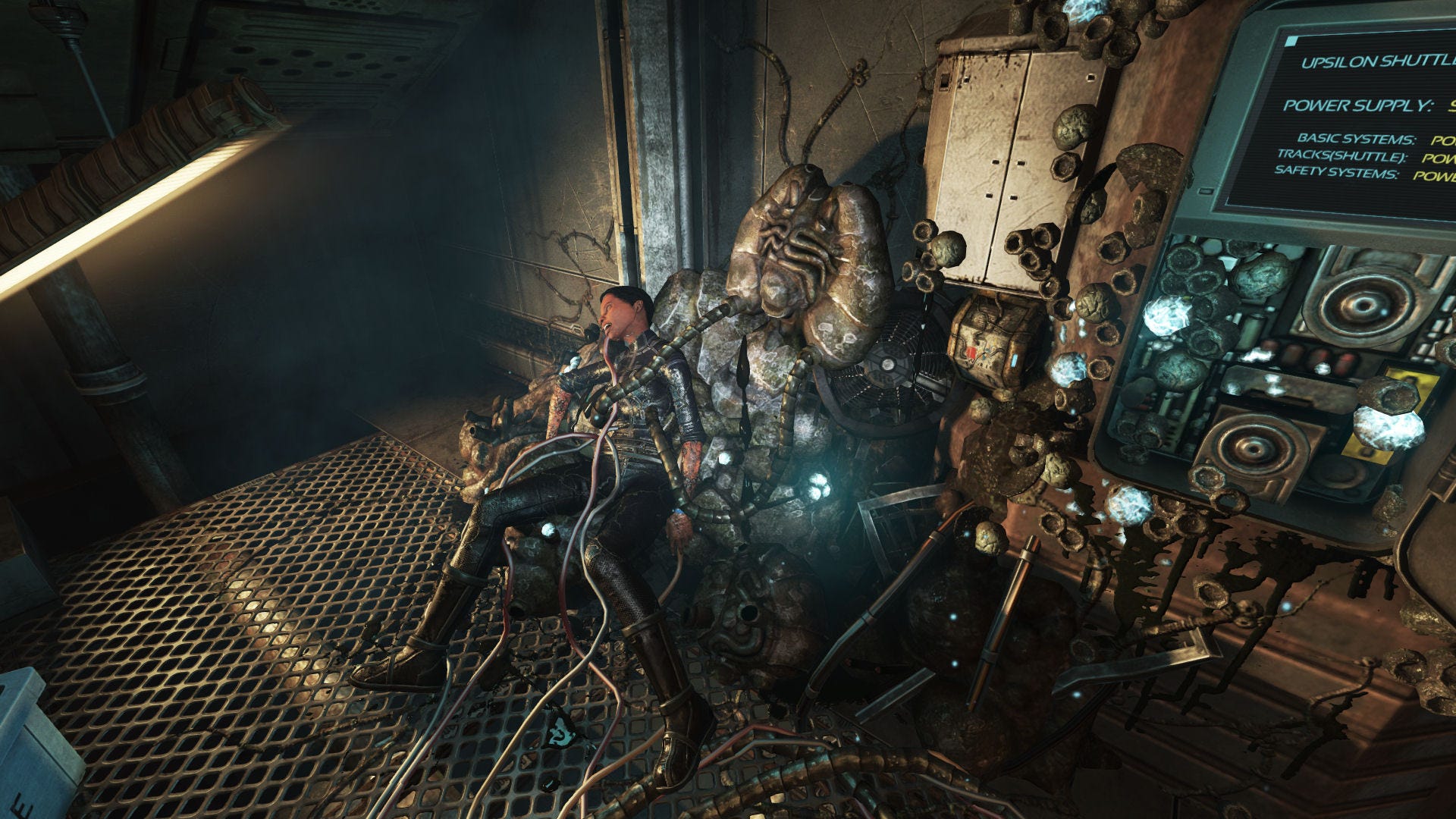
It’s around this point in the game that I started making tea more often than strictly necessary. Not because I was thirsty. Because the walk to the kitchen, the ritual of it, the heat of the mug.
These mundane aspects of life felt like proof of something. Grounding, I guess. I’m here. This is the real one. The kettle doesn’t lie. I’ll make the most of a good brew.
The ending (and I’ll stay vague, because if you haven’t played it you should, even if just once) is one of the most effective conclusions in the medium. Like much of the game before it, it offers no comfort.
It offers truth, and lets you figure out what to do with it.
The credits rolled and I sat in silence for a good few minutes. Not in the way you sit in silence after a film ends and you’re waiting for a post-credits scene, but in the way you sit in silence after someone has said something you can’t unhear.
Safe Mode and the Argument for It
Here’s where honesty is required.
The enemies (the grotesque, machine-flesh hybrids that stalk the corridors of PATHOS-II) are a problem. I know I’m not alone on this, but I feel the stealth mechanics are functional at best, genuinely frustrating at worst, and the tension they’re supposed to create can curdle into tedium when you’re crouching behind the same piece of furniture for the fourth time because a creature has inexplicably doubled back.
The game knows what it wants to say. In those moments, the delivery system gets in the way of the message.
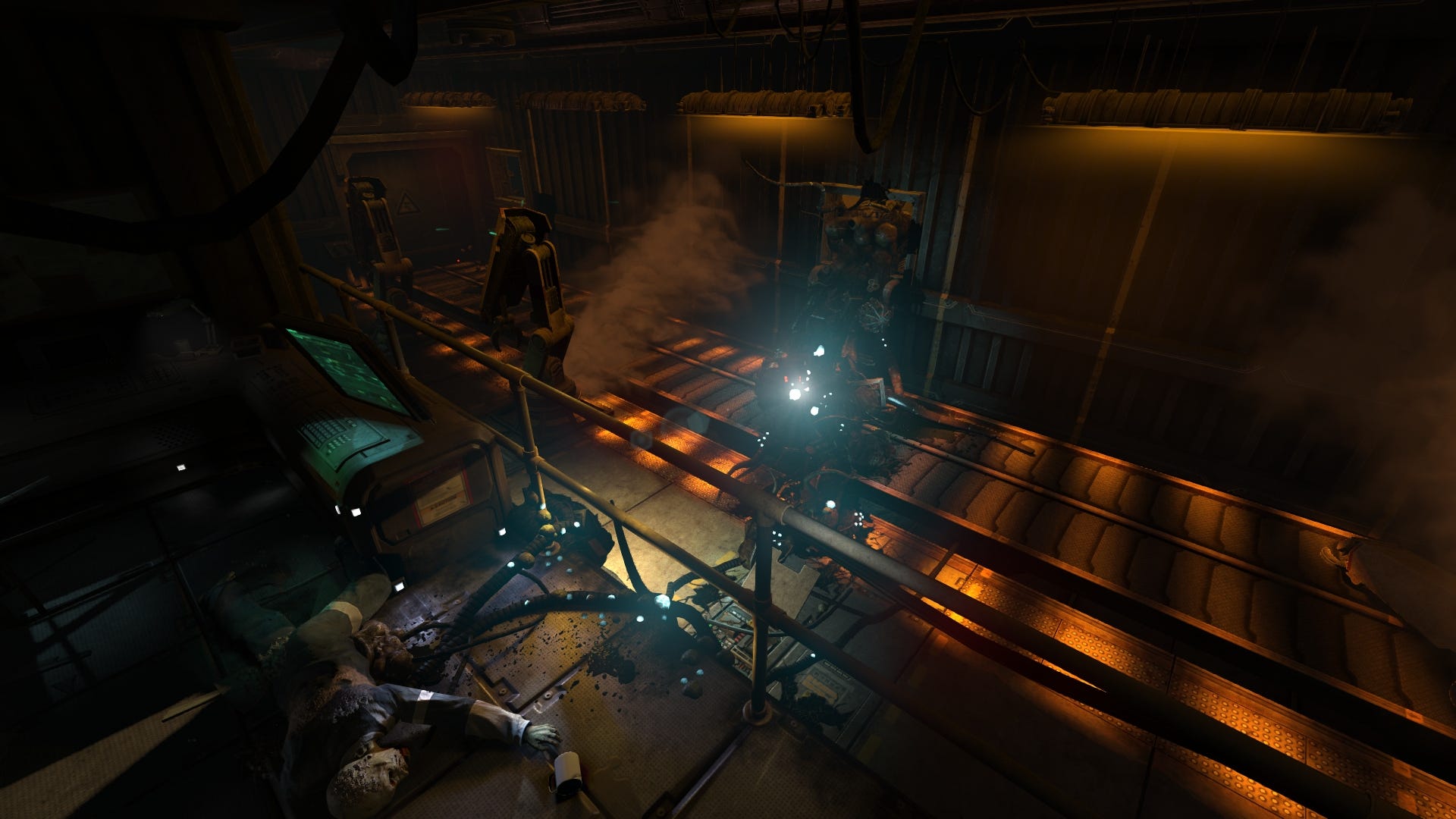
Frictional addressed this directly with safe mode, an option that keeps the enemies present and atmospheric (you can still hear them, still feel their weight in the world) but removes the threat of death entirely. Some players view this as a compromise. I’d argue it’s closer to an act of editorial clarity.
I never really felt that the enemies were really the point.
They’re an environmental element, a reminder that the world is broken and dangerous. And I definitely don’t think removing the game-over loop somehow defangs SOMA. If anything, it lets the actual horror breathe more freely. The philosophical kind, the quiet kind, the kind that follows you to the kitchen.
And there’s no shame in it.
SOMA on safe mode is still a masterpiece. Probably moreso for some. The creature design remains unsettling, the atmosphere remains oppressive, and the questions the game is asking do not become any less sharp because you’re not reloading a checkpoint.
Better Than Amnesia
I want to be careful here, because Amnesia: The Dark Descent is a genuinely important game.
Its influence on survival horror was enormous, and what it did with the sanity mechanic (punishing you for looking at the monsters, turning avoidance into the core loop) was inspired. But I never loved it the way people who love it seem to love it.
It was impressive and it was effective. It had me sleeping with the light on. But it didn’t leave me with anything to think about the next morning, or the morning after that.
SOMA did something Amnesia didn’t attempt.
It gave the horror a reason. The fear wasn’t just atmospheric dressing or genre convention, it felt more like the natural emotional response to the ideas the game was genuinely grappling with.
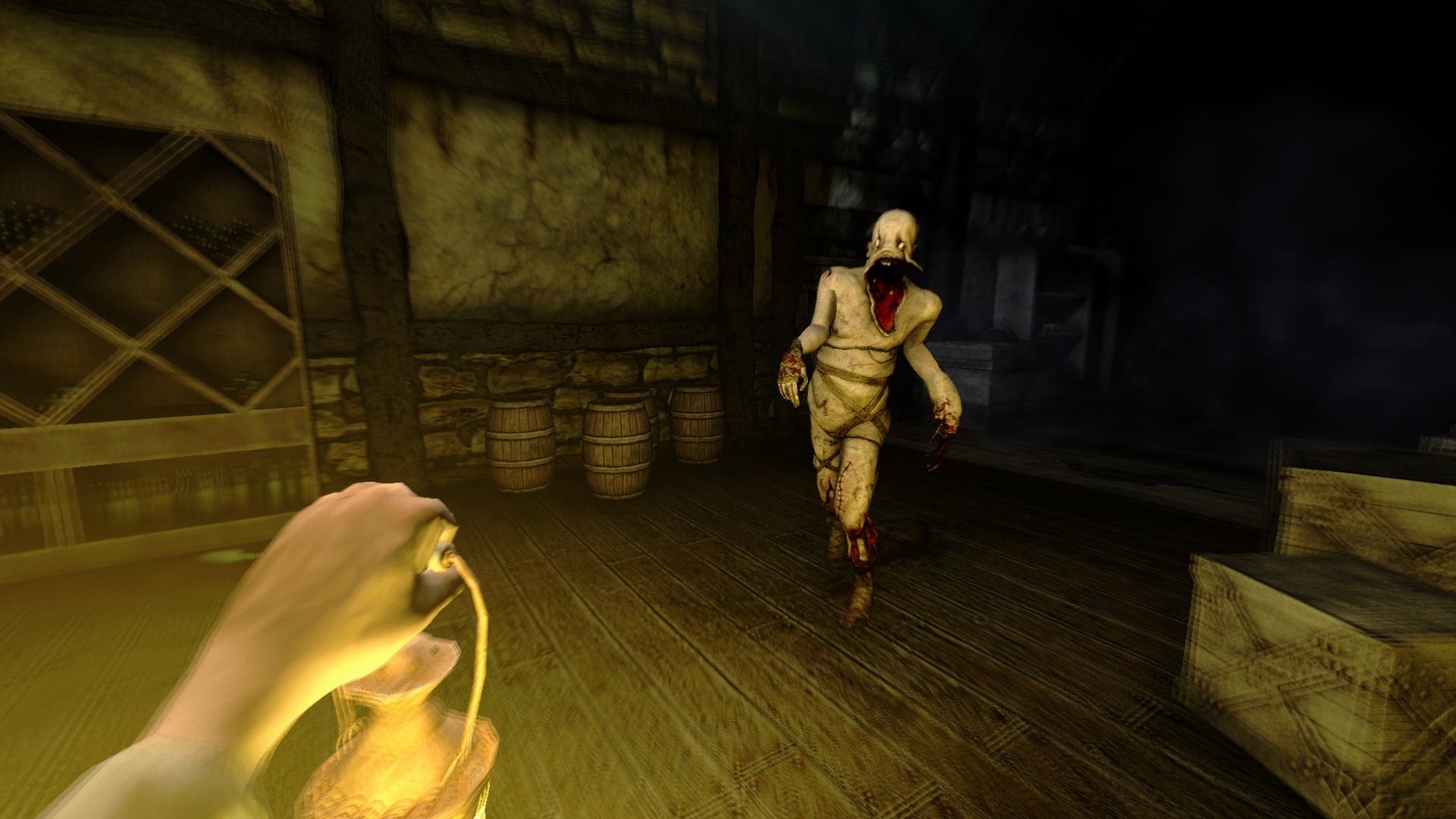
You’re scared in SOMA not just because something is chasing you, but because the game has made the stakes feel real in a way that goes beyond survival. The question of whether any version of Simon continues to exist in any meaningful sense after a scan is a question the horror is actively dramatising. The medium and the message are, for once, the same thing.
That’s why, of everything Frictional Games has made, this is the one that matters most. It’s the one that took the formula they’d refined across Penumbra and Amnesia and asked what it was actually for.
The answer they found was this. A game about what it means to be a mind inside a body, asking whether the mind survives when the body doesn’t, set at the bottom of a very cold and very dark sea.
A Wonderful One and Done
I won’t go back and I’ve made peace with that.
SOMA is not a game that invites replaying, not because it isn’t good enough, but because it’s too good. The experience it offers is fundamentally about not knowing — not knowing what’s around the next corner, not knowing what choice is the right one, not knowing, on some existential level, what you actually are.
A second playthrough would be a different thing entirely. The questions would still be there, but they’d be wearing name tags. You’d know the answers. SOMA without its uncertainty is a much smaller thing.
So it lives in memory now, the way the best experiences tend to. A bit like that book I loved years ago and can’t quite remember the name of. Imperfectly, but vividly.
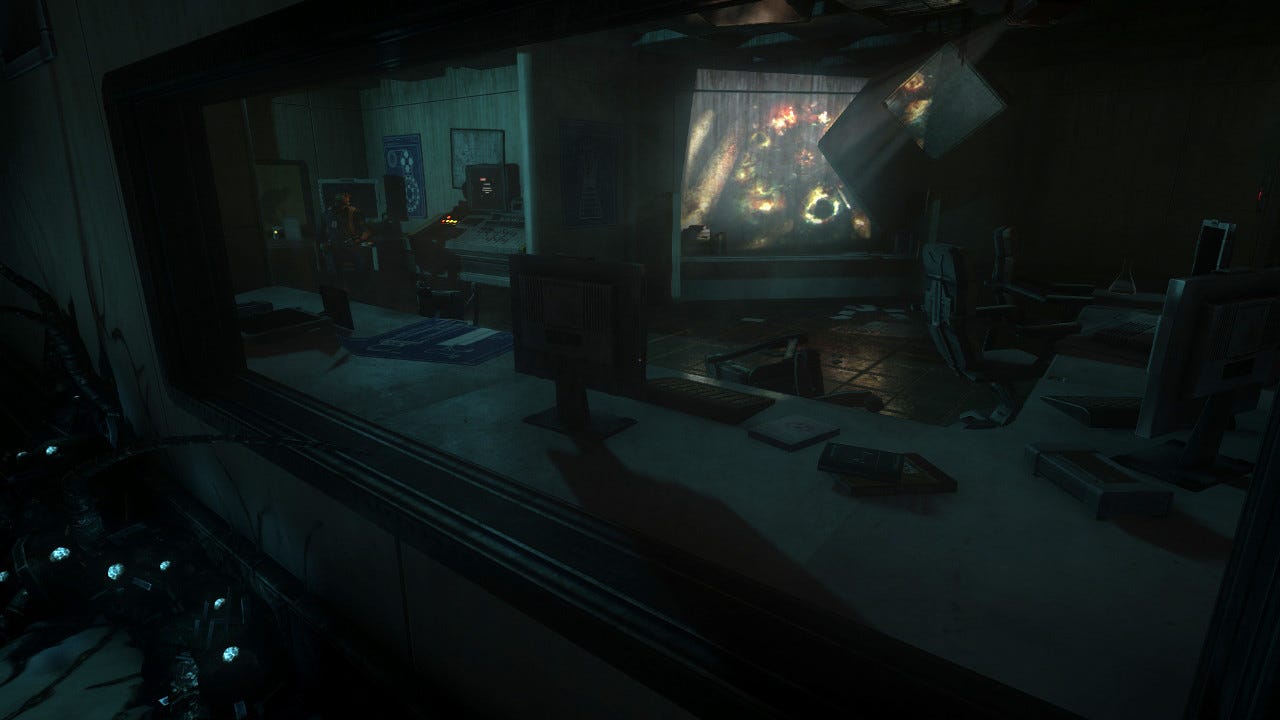
The low thrum of the station, the cold blue light filtering through the viewport. Catherine’s voice, patient and almost kind, explaining what has to happen next. And Simon, or whatever Simon is by that point, asking the only question the game ever really cared about.
The late-night trips to the kitchen are a bit less fraught now, years on. I no longer startle quite as easily at my own reflection. But occasionally, on the right kind of night, I catch myself wondering.
Not worrying, exactly. Just wondering. About copies and originals. About whether the self is a thing you have or a story you tell. About whether the version of me that woke up this morning is the same one that went to sleep, or just one that believes it is.
SOMA did that. It got in there. And I mean that as the highest compliment a game can receive.
I've been trying to write about SOMA for a while and really struggled, but now I don't need to because this piece of work exists!! As someone who deals with depersonalisation a lot, you really captured it. I didn't realise it was a part of why I loved SOMA until reading this.
I'm one of those people that safe mode was a masterpiece for. I often play games on the lowest difficulty available to me, and this has left me feeling like I missed part of the core experience more than once, but not in SOMA. The enemies really felt like a roadblock in the way of the real horror.
Thank you for articulating what I was unable to, this was a very cathartic read.