


94 'Til Infinity is now twice weekly! 🎉
Sundays remain your home for the deep dives and nostalgia you're used to. Wednesdays bring something new to the mix; short(er) posts that dig into the weird and wonderful side of early PlayStation culture.
Enjoy.
- Chris.
If you remember the 90s, you’ll remember console advertising looking a certain way.
Bright colours, fast cuts, characters bouncing around on screen. You knew exactly what you were watching and who it was for. But then Double Life landed, and nothing quite looked the same again.
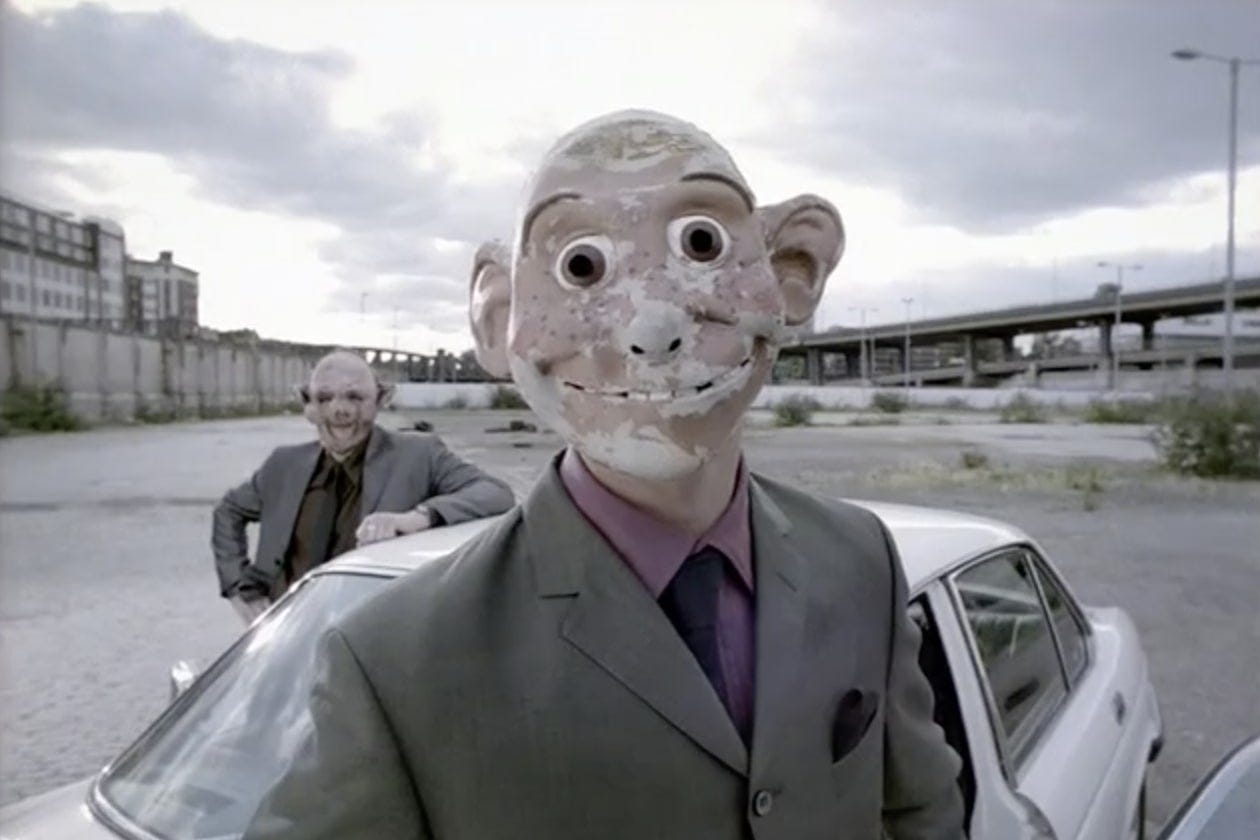
Created by TBWA\London and directed by Frank Budgen, Double Life featured no gameplay footage whatsoever.
Instead, 19 real people who were not actors (apparently) and had genuinely real faces with actual charisma took turns confessing their secret lives to camera.
Set to Fauré’s Requiem, it was moody, a bit unsettling, and completely unlike anything gaming had put on television before. It became the most awarded ad campaign of 1999/2000, and watching it today it still holds up.
The brief was clearly intentional, and though the high-concept approach carried some risk, Sony had already made its move with the PlayStation. Gaming wasn't just for kids anymore. Wipeout, Resident Evil and Fear Effect proved that.
But now they wanted to cement that idea.
TBWA, the agency behind Apple's iconic '1984' ad, knew exactly how to make a product feel like a cultural shift. And once again, they delivered.

And then for the PlayStation 2, Sony went further.
The Third Place campaign leaned even harder into surrealism. Chris Cunningham, who was relatively fresh from directing Aphex Twin videos, made Mental Wealth, a deeply strange ad featuring a Scottish girl with an insect-like face speaking directly to camera.
Sony went further still with the PlayStation 3 with David Lynch, who was brought in to direct the campaign’s flagship spot.
Monochrome, doppelgängers, an industrial soundtrack, a faint Twin Peaks energy. It was the kind of ad your parents watched in silence before asking what on earth they’d just seen.
None of these campaigns showed you a single game. But maybe that was the point? There was always plenty of other campaigns that did.
What Sony grasped, and what most of their competitors missed, was that they weren't just selling a console. They were selling an identity along with it.
The advertising wasn’t aimed at convincing you the games were good. Most people probably knew that was already the case. I think it was aimed at making you feel like PlayStation was the kind of thing you were into.
I think that’s a completely different sell.
Did it work? Sure. The PlayStation was already a runaway success, so Sony had earned the freedom to get a little weird with it.
A generation of us grew up thinking PlayStation was cool in a way that felt earned rather than manufactured, which is the best trick advertising can pull off.
Go and watch Double Life above if you haven’t seen it in a while. It’s worth a minute of your Wednesday.
If you enjoy my work and want to support it, consider buying me a coffee. It helps keep the words flowing and the ideas brewing!