
PlayStation Past Midnight
A great philosopher once wrote...


In 1995, Sony's UK marketing team had an idea that probably raised a few eyebrows internally: forget the shops and the expos for a moment, and put the PlayStation inside a nightclub.
On paper, a nightclub seems like the last place you'd go to sell a games console, but the reality was rather different. It wasn't an accident of taste, but more a calculated read on where a significant chunk of British youth culture actually was.
Britpop might have been dominating the charts, but the club and rave scene was pulling in its own enormous crowd, one that Nintendo and Sega were largely ignoring, still pitching to children and bedrooms.
Sony UK, taking a huge risk, looked at where those people were spending their Friday nights and decided to bring their best games along.
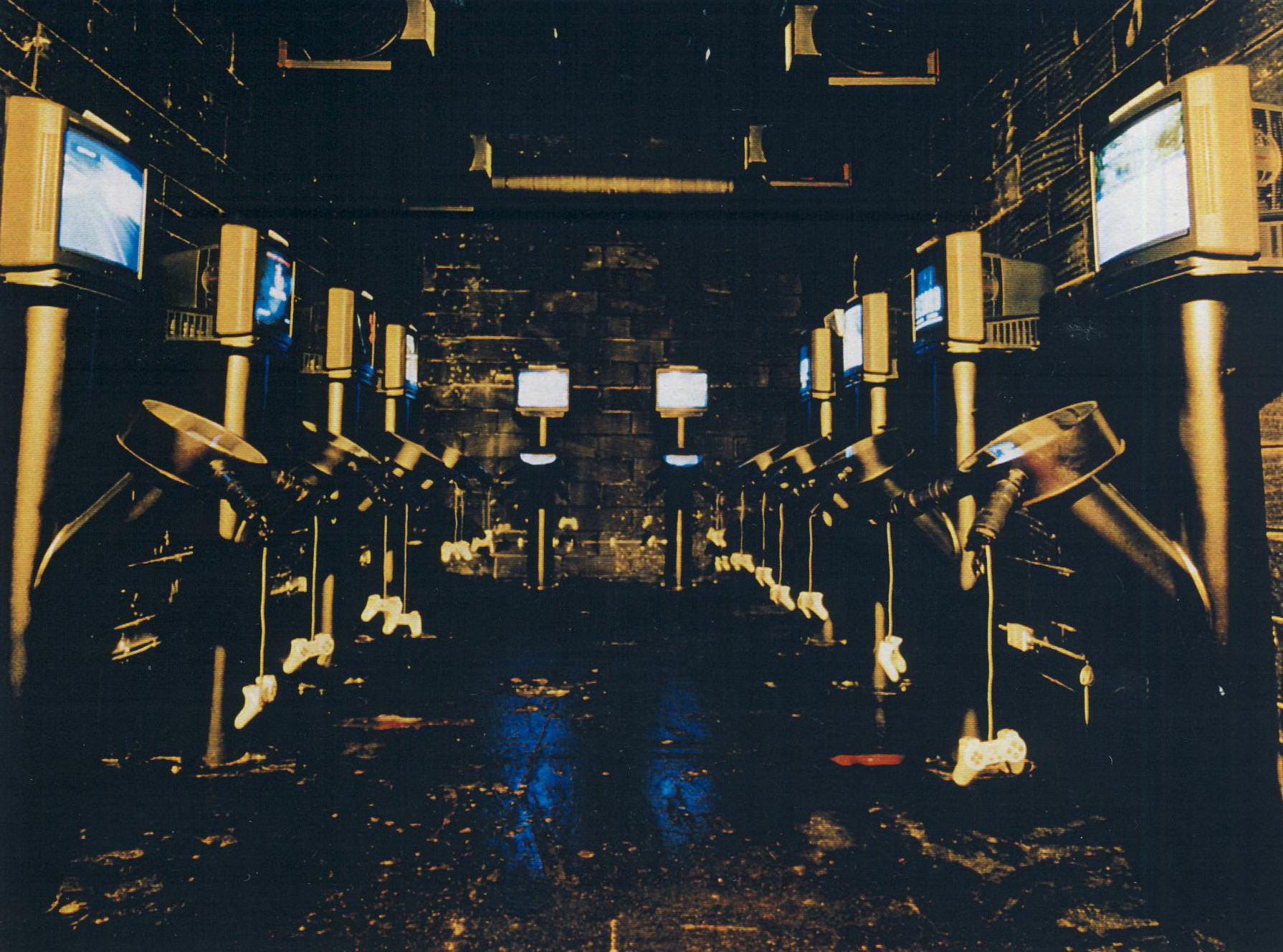
Looking back it's obvious why it worked, especially with Wipeout on the bill, a game that felt like it had been designed for exactly this kind of room, because in many ways it had.


The soundtrack pulled in Leftfield, The Chemical Brothers and Orbital, big beat and electronic music baked in from the very start.
The whole visual identity, designed by Sheffield art collective The Designers Republic, a studio better known for underground techno album sleeves, looked less like a video game and more like a record you'd find in a crate at the back of a specialist shop.
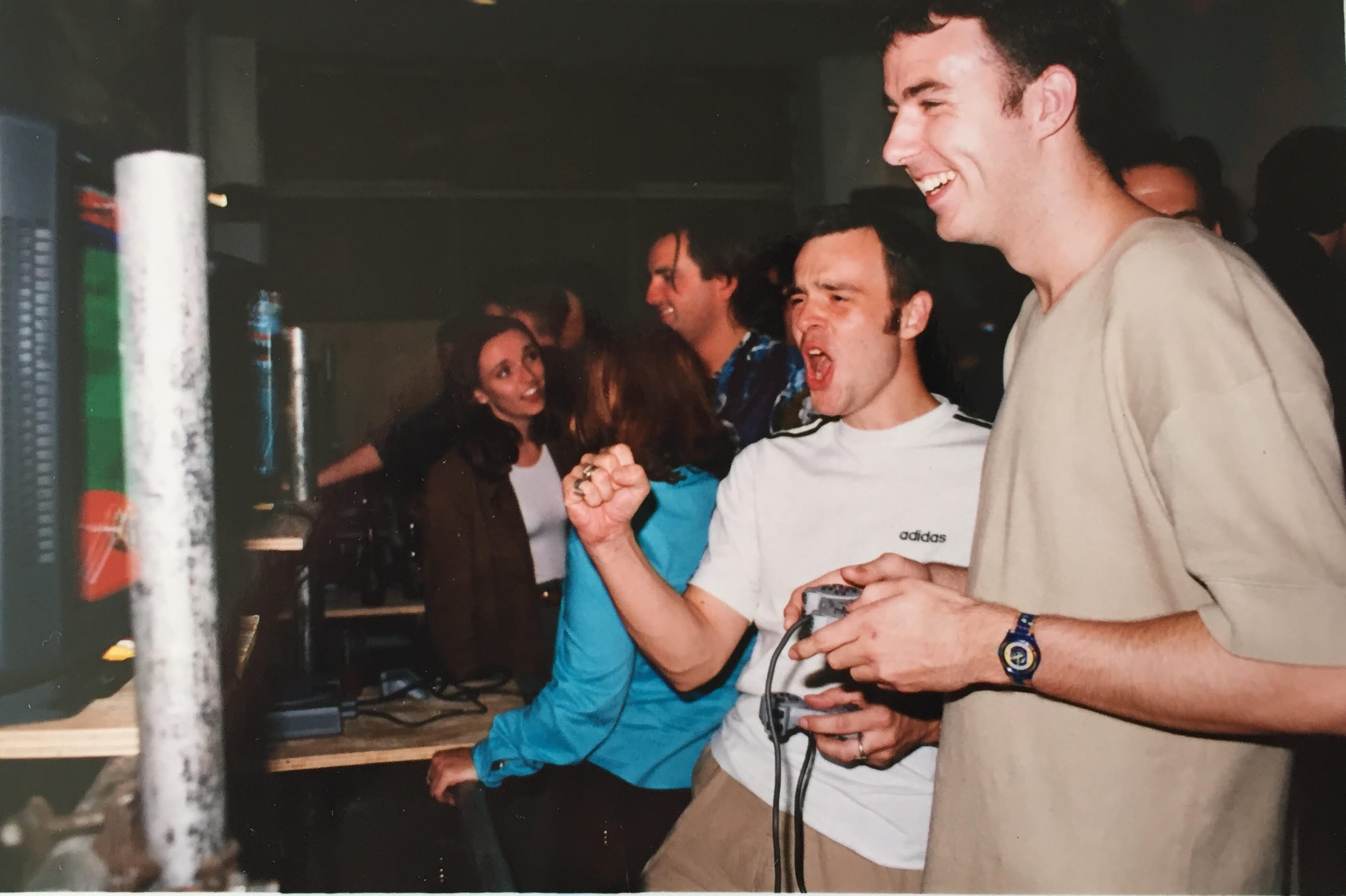
The print adverts pushed it further still, two young people looking dishevelled and zoned out with blood from their noses, nothing like anything Nintendo had ever put in a magazine. A moral panic duly followed, and as Ian Anderson from The Designers Republic more or less pointed out, that was largely the idea.
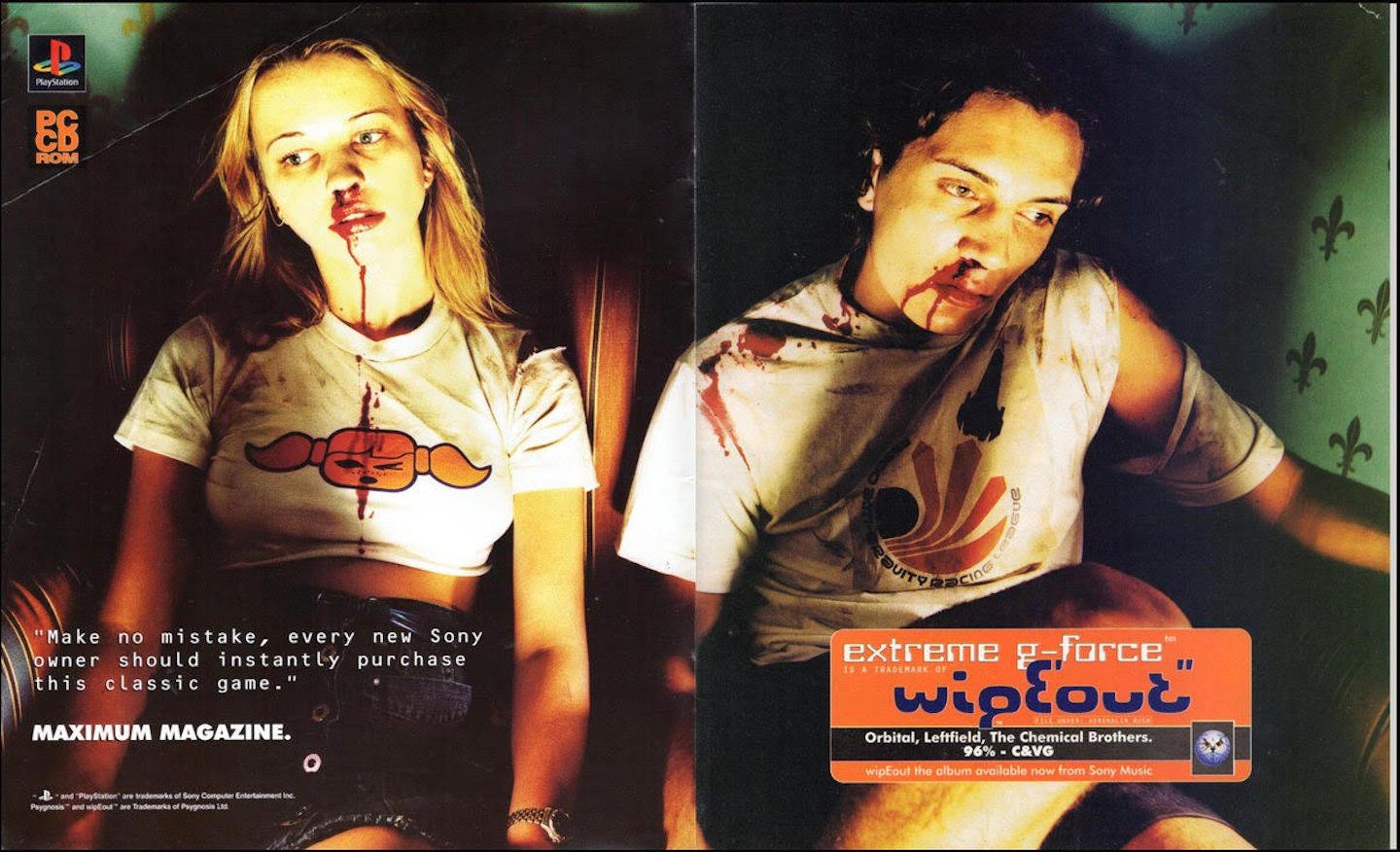
PlayStation’s UK marketing manager Geoff Glendenning built a database of over 500 nightclubs and worked with 52 of them to install PlayStation chillout rooms, at Ministry of Sound in London, Birmingham Sanctuary, Glasgow Tunnel and Eclipse in Hull.
Glendenning, speaking about his approach, said: “Having been part of the late 80s rave and underground-clubbing scene, I recognised how it was influencing the youth market. In the early 90s, club culture started to become more mass market, but the impetus was still coming from the underground, from key individuals and tribes.
“What it showed me was that you had to identify and build relationships with those opinion-formers – the DJs, the music industry, the fashion industry, the underground media.”
Cream in Liverpool was a different arrangement entirely, less corporate strategy and more a natural extension of who was making the game.
Psygnosis had such a close relationship with Cream that they worked directly with the club, completely outside the official programme. The developers were clubbers, and that particular partnership didn’t need anyone drawing up a brief.
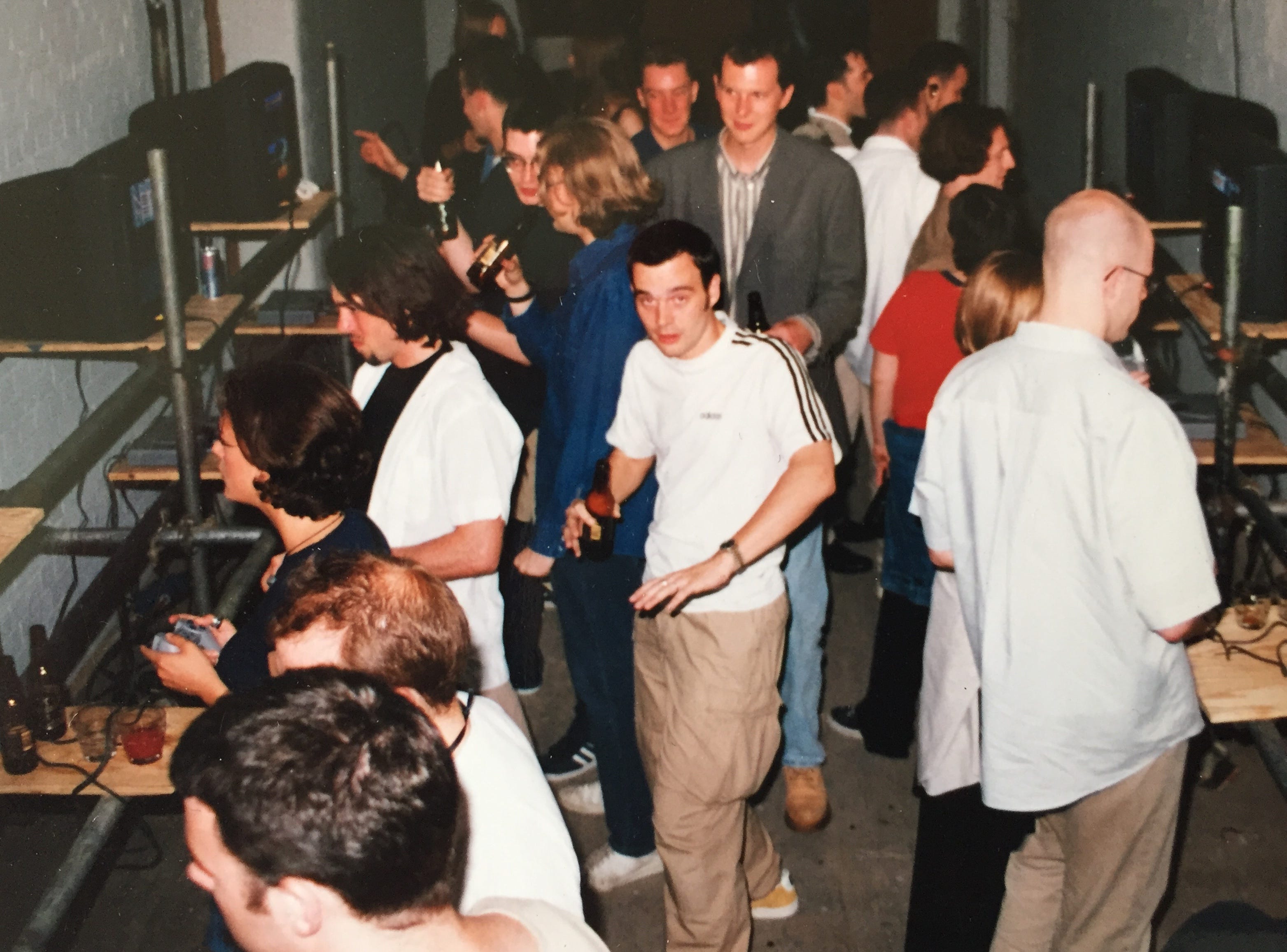
Wipeout was the headline act, but it wasn't the only game in the chillout rooms, and none of them were particularly forgiving to someone in a less than focused state of mind.
People played them anyway. Which, when you think about the circumstances, is a fairly remarkable thing. A remarkable story, really. About as grassroots as marketing gets, targeted at exactly the right crowd at exactly the right moment.
Psygnosis ended up platforming British dance culture to a global audience, whether or not that was ever really the plan, and a generation of people had their first experience of the PlayStation not under a Christmas tree but at two in the morning, ears still ringing, controller passed between strangers.
Naughty, naughty, very naughty.

Was just listening to “Atom Bomb” by Fluke which was featured in Wipeout 2097. Crazy connection !
Pretty fascinating! Never knew Sony did this. The company was brilliant once, to be sure.
Shoutout to one of the most terrifying music videos, Ebenezer Goode. Totally not about drugs at all!